
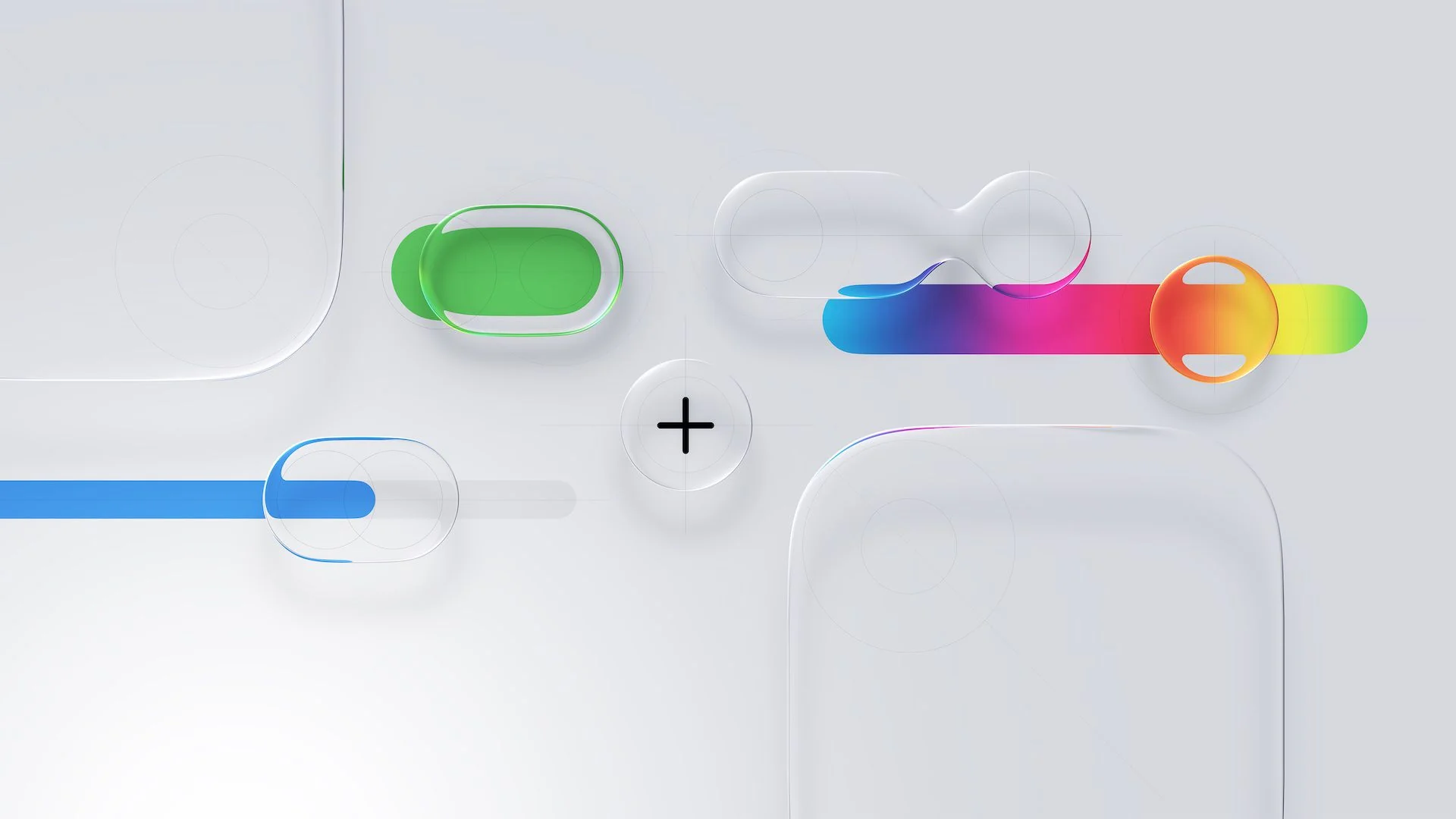
Liquid Glass has not been well received. Let's be honest: most users – specialists or not – have greeted Apple's new design language with skepticism, indifference, or outright rejection. Some people have chosen not to update their iPhone rather than live with it. Online, complaint threads number in the thousands.
And yet, I think they're wrong.
This has happened before. In 2013, iOS 7 landed like a bomb. Jony Ive threw out years of skeuomorphism, the stitched leather, the wooden shelves, the raised buttons, and replaced it with something that looked bare, almost unfinished. The icons were too thin. The colors, too saturated. Legibility, a disaster. People hated iOS 7 with an intensity that's hard to remember today.
Twelve years later, everything that came after was an iteration of that. The Flat Design that iOS 7 introduced ended up becoming the dominant visual language of the industry for an entire decade. Not because it was perfect from day one, but because it was right about what mattered.
Liquid Glass is right about what matters.
Let me explain why before you keep reading with your eyes rolling.
Liquid Glass is not an aesthetic change. It is a demonstration of technical muscle that is only possible when you control hardware and software at the same time. The reflections that shift as you tilt your iPhone are not a pre-rendered effect: they react in real time to the device's sensors. When you unlock your phone and see the background image refracting behind the glass, as if you were lifting a sheet of pristine crystal, that is not a static animation: it is the system calculating how light would physically bend through that material.
The macOS Dock is no longer a floating bar. It integrates with the desktop background, breathes with it, and its animations are completely fluid, no cuts, no discrete states, only continuous motion. On Apple TV, the interface stops being an interface: your television becomes something worth looking at even when you're not doing anything. The playback controls in video refract the content still running behind them, in real time, without the video pausing a single frame.
All of this comes directly from visionOS, where the interface could never be opaque because the environment was the background. Windows had to be translucent because behind them was a living room, an office, a street. Shadows were real because they fell on real surfaces. Apple has spent years solving that technical problem, and Liquid Glass is the distillation of those solutions brought to conventional screens.
It is a design system built on details. And details, when executed well, are the only thing that matters.
That said: the problems exist and they are real. Accessibility has been the Achilles' heel from day one. There are background-and-glass combinations where contrast disappears and legibility falls apart. On some older devices, the cost of rendering refraction in real time is noticeable. Apple has added toggles in later versions of iOS 26 to moderate the effect's intensity, a pragmatic concession that works, but one that dilutes part of the original intent.
Sound familiar? It should.
iOS 7 arrived with exactly the same problems. Compromised legibility, inconsistent performance on older devices, accessibility options added after the fact to quiet the criticism. The difference is that Liquid Glass launches considerably more mature: the technical architecture underneath is more solid, the cross-platform coherence is stronger, and Apple has learned how to manage this kind of transition.
What we are watching is not a redesign that went wrong. It is the first chapter of a design language that will define the industry for the next five to ten years. As happened with iOS 7, at some point we will stop seeing it because it will have disappeared, not because they removed it, but because it will have become the norm. What we expect. The invisible. And when that happens, no one will remember they once chose not to update their iPhone to avoid it.
We are on the eve of a new WWDC. No major revolutions are expected: Apple rarely makes two big bets back to back. But something equally important is coming: every iOS 26 iteration has been quietly refining Liquid Glass, filing down the roughest edges, improving contrast, optimizing performance. The upcoming WWDC is not going to reinvent the system. It is going to tune it.
And every adjustment Apple makes is one more signal that this was never an experiment. It was a statement of intent.